Key Takeaways
- Evaluate usable, level ground rather than relying on the yard’s total size.
- Check drainage, septic areas, trees, access, parking, and utilities before deciding where rentals will go.
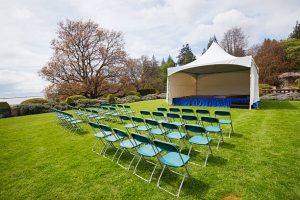
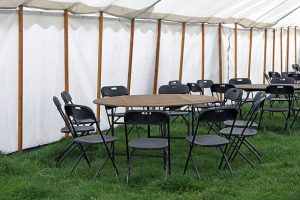
- Identify where a tent, seating, food, and guest pathways can realistically fit before finalizing the guest count.
A yard can work well for a large outdoor party if it has enough usable level space for guests and rentals, safe access, suitable ground conditions, and room for parking and essential event areas.
The important word is usable. A property can have a large backyard on paper but much less practical event space once you account for slopes, landscaping, trees, septic areas, patios, and other obstacles. Checking these conditions before finalizing your guest list or reserving rentals can help you create a party that feels comfortable instead of trying to squeeze everything into a space that cannot realistically handle it.
Start With the Amount of Usable Space
Walk through your yard and look at it as an event space rather than simply as a lawn. Gardens, retaining walls, decks, patios, play equipment, sheds, fire pits, trees, and steep sections all reduce the amount of space where you can comfortably place tables and chairs.
Measuring the main event area is a good place to start. Think about where guests will actually sit, eat, and gather, but leave space between those areas too. Fifty people may technically fit into a section of lawn, but that does not mean they will be comfortable once chairs are pulled out and people begin walking between tables.
Knowing your usable dimensions also makes it easier to determine whether the guest count you have in mind is realistic before you begin reserving equipment.
Check the Ground Before Planning Tables or a Tent
A flat-looking lawn can still have dips, soft areas, or sections that stay wet after rain. Those conditions become more noticeable once you put tables, chairs, and dozens of guests on them. Sloped ground can make seating uncomfortable, while soft or muddy areas can create problems for both guests and equipment.
You should also know what is below the ground before deciding where a tent or other equipment will go. Septic systems, irrigation components, buried utilities, and other underground features may affect where stakes or heavier equipment can safely be placed. If you are unsure about a particular area, confirm what is underneath it rather than assuming it is suitable based on appearance alone.
This is especially worth addressing early. Discovering that your planned tent location cannot be used after the rest of the yard has already been laid out can force you to rethink the entire setup.
Look Up Before Choosing Your Tent Location
Ground conditions are only half of the equation when deciding where a tent can go. Look overhead as well.
Tree branches, utility lines, and other overhead obstructions can limit otherwise open-looking areas of the yard. Trees can also create awkward placement issues if trunks or low branches interfere with the footprint you had planned.
Decide where your primary covered area could realistically go before planning everything around it. If weather changes during a New England event, your tent may become the most important part of the backyard, so it should not be treated as whatever fits into the space left over.
Think Beyond the Yard Itself
A large party affects more than the patch of grass where guests will spend most of their time. Parking, access to the house, and basic utilities all become more important as the guest list grows.
Guest Access and Parking
Think about where cars will go before invitations are sent. Your driveway may handle your household easily but become overwhelmed when 30 or 40 guests arrive within the same hour.
Then follow the path guests will take from their cars to the party. Narrow gates, stairs, uneven side yards, and landscaping can make access more difficult, particularly for older guests or anyone with limited mobility. Keep entrances and major pathways clear instead of placing chairs, coolers, or games wherever there happens to be room.
Power and Restroom Access
Guests will likely need regular access to the house for restrooms, and your setup may require electricity for speakers, lighting, fans, or other equipment. Consider where exterior outlets are located and whether cords can reach equipment without crossing heavily traveled areas.
If extension cords are necessary, plan their route before setup. Running a cord directly through the main walkway may work electrically, but it creates a trip hazard that could have been avoided with a better layout.
Picture the Entire Event in the Space
Once you know which areas of your property are realistically usable, picture the whole party rather than evaluating each rental individually. Where will the tent or shade go? Where will guests sit? Where can food and drinks be served without creating a bottleneck? Is there enough open lawn left for games?
You can even use stakes, cones, or other markers to roughly outline these areas before renting anything. If the yard starts feeling crowded while it is still only marked on the ground, that is a good sign that you should reduce the setup or reconsider the guest count.
Choose Rentals That Fit Your Yard With 603 Event Rentals
Your property should determine your rental plan, not the other way around. After measuring the usable area and estimating your guest count, you can make more informed decisions about tables, chairs, tents, and lawn games instead of trying to force a predetermined setup into the yard.
603 Event Rentals offers event essentials for backyard celebrations, with a 5-day rental period that provides extra time to prepare and set up before the party. Start by understanding what your yard can comfortably handle, then choose the rentals that fit the space and the way you want guests to use it.